

Blog
Nov 25th, 2017
Capturing Winter Wonder: Photographing Yellowstone’s Winter Wildlife
Originally published November 25, 2017. Updated for photographers planning a Yellowstone winter wildlife photography trip.
In 2017, I was delighted to be approached by National Wildlife to write an article on how to photograph Yellowstone’s winter wildlife. The article, “Capturing Winter Wonder,” focused on the field craft, preparation, ethics, and patience required to photograph wildlife in one of the most demanding seasons of the year.
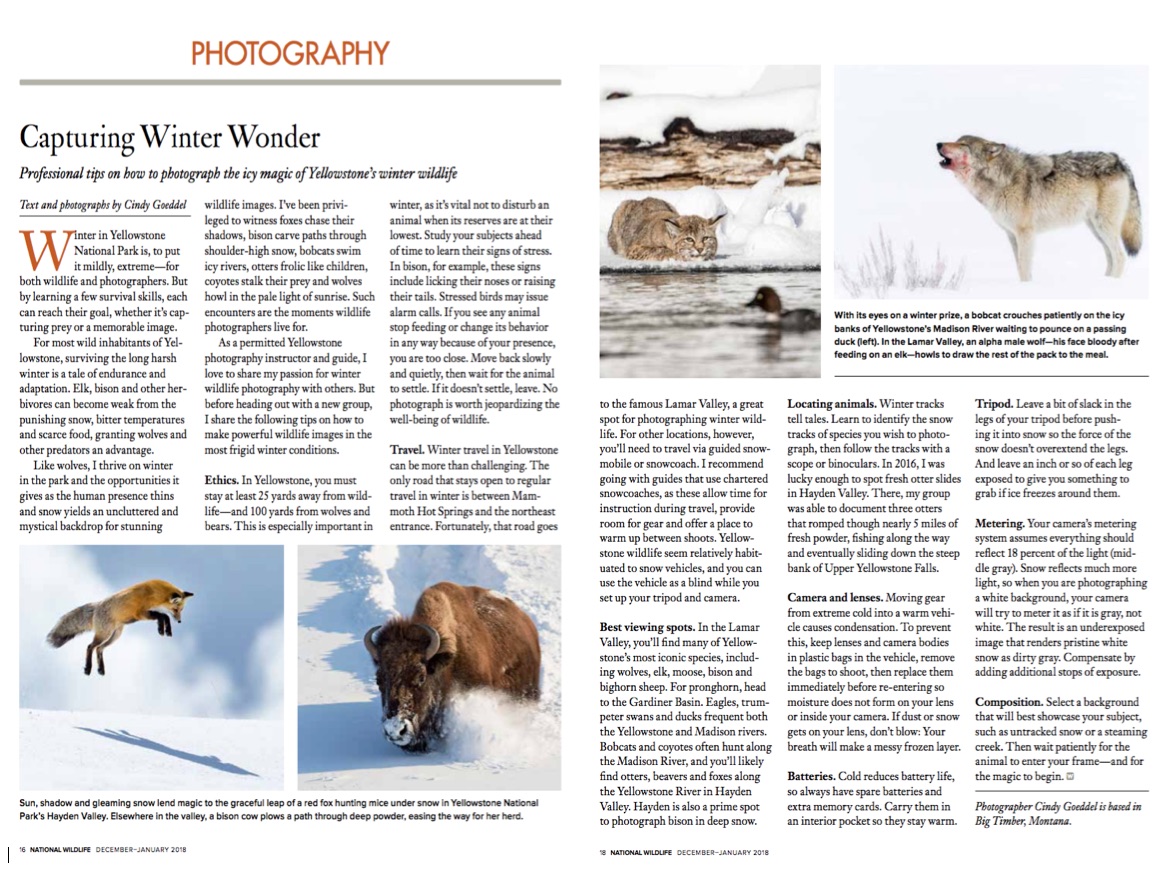
Yellowstone in winter is not simply Yellowstone with snow on the ground. It is an entirely different photographic experience. The crowds are thinner, the landscape is quieter, and snow simplifies the scene in a way that can make wildlife images feel cleaner, stronger, and more timeless.
For photographers who want to experience this season in the field, I now lead a small-group 2027 Yellowstone Winter Wildlife Photography Workshop focused on winter wildlife, snow, soft light, and serious field time.
Why Yellowstone Winter Photography Is So Different
Winter strips Yellowstone down to its essentials.
The snow removes visual clutter. Steam rises from thermal areas. Bison push through deep powder. Foxes listen for movement beneath the snow. Coyotes hunt across open flats. Wolves move through Lamar Valley. Bobcats may appear along icy river corridors. Even familiar subjects become more powerful when photographed against clean snow, soft light, and the stark reality of winter survival.
This is what makes Yellowstone winter wildlife photography so compelling. The images are not only about the animal. They are about endurance, atmosphere, behavior, and place.
What Makes a Strong Yellowstone Winter Wildlife Image
The best winter wildlife photographs are rarely just tight portraits. Strong winter images often combine clean backgrounds, visible behavior, careful composition, and a real sense of environment.
Snow can simplify an image beautifully, but it can also fool the camera meter and turn white snow gray. Cold temperatures drain batteries faster. Moving gear between warm vehicles and freezing air can create condensation. Tripods can sink into snow. Gloves can make camera handling slow and awkward.
These details matter because winter photography rewards preparation. When the moment finally happens, you need to be ready.
Field Craft Matters
Photographing Yellowstone’s winter wildlife requires more than knowing camera settings.
You need to understand how animals move through the landscape, how they conserve energy, and how to recognize when your presence may be affecting behavior. In winter, animals are already working hard to survive. Good field craft means giving wildlife space, moving slowly, staying aware, and letting behavior unfold naturally.
The goal is not to chase images. The goal is to recognize opportunity, position responsibly, and be ready when the moment comes together.
Photographing Yellowstone Wildlife Responsibly
Ethics matter in every season, but they matter even more in winter.
In Yellowstone, photographers and visitors are required to stay at least 100 yards from wolves and bears and at least 25 yards from other wildlife, including bison, elk, and other large animals. Those distances are minimums, not goals. In winter, I often give animals even more room.
No photograph is worth pushing wildlife, interrupting natural behavior, or forcing an animal to burn energy it needs to survive.
Patience is part of the craft. The best images often come when the photographer slows down and lets the scene develop.
Why I Still Love Photographing Yellowstone in Winter
I have photographed Yellowstone in many conditions, but winter remains one of the most powerful seasons for wildlife photography.
The light can be soft and subtle. The backgrounds are often clean. The behavior can be intense. The environment itself becomes part of the story.
For photographers willing to work in the cold and stay patient, Yellowstone winter offers opportunities that simply do not exist in the same way during any other season.
Join Me in Yellowstone in Winter 2027
My 2027 Yellowstone Winter Wildlife Photography Workshop is designed for photographers who want a serious field-based experience in one of the most visually powerful seasons in Yellowstone.
The workshop includes Lamar Valley field time, private snow coach access into the park interior, winter wildlife photography instruction, and hands-on guidance throughout the trip.
This is a workshop for photographers who want more than a casual visit. It is for people who want to understand the conditions, work with winter light, photograph wildlife responsibly, and come home with stronger images.
View the full 2027 Yellowstone Winter Wildlife Photography Workshop details here.

Five Reasons Why I Shoot in Manual Exposure Mode
The Artist’s Eye
Recent Entries
- Not Just Jaguars: A Pantanal Wildlife Photography Workshop Through Wild Brazil
- Wild Alaska by Private Yacht: Why This Katmai Photo Workshop Is Different
- Clear Views, Clean Angles: Why Vehicle Space Matters on a Botswana Photo Safari
- How to become a better wildlife photographer in your own back yard.
- Five Reasons Why I Shoot in Manual Exposure Mode
- Capturing Winter Wonder: Photographing Yellowstone’s Winter Wildlife
- The Artist’s Eye
- Icy Dispatch
- Blogging the Blog - National Wildlife Week
- Bison Behavior and Survival
- Winter Highlights Report
- Coyote Climbs Tree and Steals Bobcat’s Duck!